
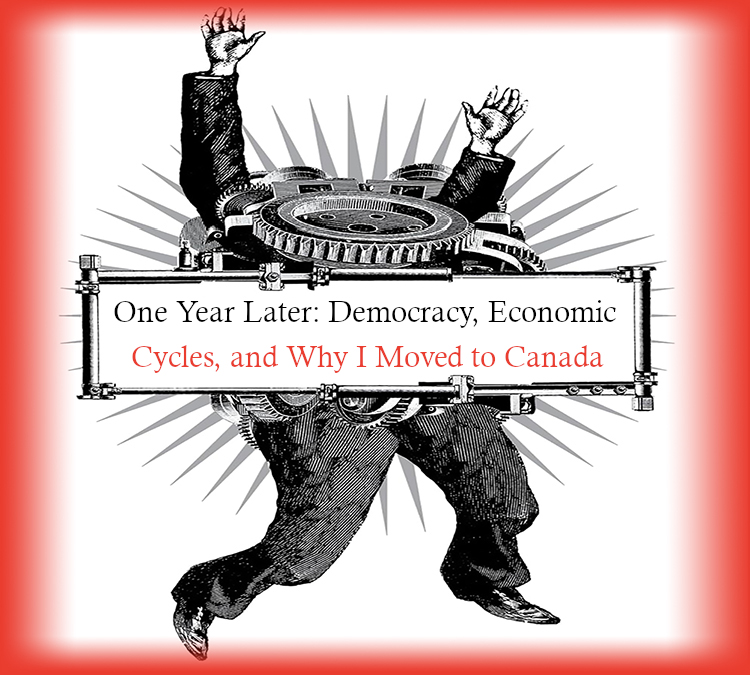
One year ago, I wrote an article titled “Cost Cutting, Resilience, and the Future of Dallas Maids in a Brave New World.” At the time, I genuinely hoped it would age like milk. I hoped the warnings about political instability, economic stress, and democratic erosion would prove exaggerated. Instead, the patterns I described have accelerated.
This is my one-year reflection.
Studying How Democracies Fall
Since Donald Trump’s first term, I’ve added a significant number of books to my reading list focused on three themes:
- How democracies decline
- How authoritarian leaders consolidate power
- How economic cycles drive political instability
Historians and political scientists have been writing about these patterns for years. Timothy Snyder in On Tyranny warned about normalization of authoritarian behavior in modern democracies.[1] Steven Levitsky and Daniel Ziblatt in How Democracies Die outlined how democratic backsliding often occurs gradually, through institutional erosion rather than sudden coups.[2] Ruth Ben-Ghiat’s Strongmen examined how modern authoritarian leaders consolidate power using media manipulation, nationalism, and division.[3] Anne Applebaum has written extensively on democratic fragility and the appeal of authoritarian politics in polarized societies.[4]
These are not fringe commentators. They are mainstream academics specializing in fascism, authoritarianism, and democratic decline.
What struck me most wasn’t partisan rhetoric. It was pattern recognition.
Historically, when you see:
- A widening gap between rich and poor
- Increasing political polarization
- High and unsustainable public debt
- Loss of trust in institutions
- Populist leaders rising to power
You are often witnessing late-stage stress in a dominant power. Those signs were crystal clear to me. So in 2022 I made a decision: I’m moving my family to Canada.
At the time, some friends thought it was a bit drasic. One wrote me, “When you guys moved to Canada I thought it was a bit extreme but now I realize you were just smarter than the rest of us.”
I sincerely wish I had simply been a bit extreme.
Economic Cycles and the “Changing World Order”
The political instability we’re witnessing cannot be separated from economic cycles. Ray Dalio’s book The Changing World Order convincingly argues that great powers follow long-term debt and power cycles.[5] As debt rises, productivity slows, inequality widens, and political division increases. When internal stress coincides with external rivalry from rising powers, instability intensifies.
The United States is currently carrying historically high debt relative to GDP. Wealth inequality has widened dramatically over decades. Trust in institutions is near historic lows. These are measurable facts, not emotional reactions.
Dalio warns that late-stage empires often experience currency devaluation, inflation, and painful restructuring. He has even suggested that geographic diversification can be a rational move during systemic transitions. And since such transitions tend to be bloody, he suggests moving out of the country may be wise, too.
That analysis resonated with me.
Over the past several years, I began repositioning a portion of the investments I manage into tangible assets, that is things with intrinsic value and real-world utility. That includes maintinaing current businesses and starting new businesses such as Oakville Maids in Ontario (diversifying geographically) and Denton Maids in Texas, along with precious metals, real estate, and select collectible assets.
The logic is straightforward: real assets, particularly those outside the traditional banking system, often serve as hedges during inflationary periods or currency stress. If a severe economic contraction occurs, preserved capital provides optionality, the ability to acquire strong assets at generational discounts when others are forced to sell.
History shows that during periods of major disruption, wealth is destroyed… but it is also created.
Preparation matters.
Ray Dalio shares a summary of his book, The Changing World Order, in the video above. However, I highly recommend you read his book. (Amazon link to book in the Footnotes section at the bottom of this article)
The Thucydides Trap and Great Power Conflict
Economic decline is not the only concern.
Political scientist Graham Allison popularized the term Thucydides Trap to describe the danger that arises when a rising power threatens to displace an established one.[6] The term originates from the ancient Greek historian Thucydides, who wrote that the rise of Athens and the fear it instilled in Sparta made war between them likely.
In modern terms, this framework is often applied to U.S.–China rivalry. Now not every power transition leads to war. But historically, many have. And today, the stakes are far higher than in ancient Greece because nuclear weapons exist.
Some argue that mutual annihilation deters conflict. That may be true. But deterrence assumes rational actors. When authoritarian leaders consolidate power, whether Vladimir Putin, Xi Jinping, or any other strongman, predictability declines.
Do I believe nuclear war is likely? No.
Do I believe the probability is higher than I would prefer? Yes.
That alone justifies awareness and contingency planning.
Is U.S. Democracy Dead?
One year ago, I wrote bluntly that U.S. democracy was at risk. I still believe it is severely strained, much more so now. Over the past several years, we have witnessed increasing pressure on institutions that traditionally serve as guardrails, from the reshaping of federal agencies through the installation of loyalists, to expanded executive authority, to a Supreme Court that now holds a firm conservative supermajority after multiple appointments in a short period of time. Critics argue that this ideological skew has strengthened presidential power and weakened long-standing precedents that once acted as stabilizers. Supporters see constitutional correction. What is undeniable is that the balance of institutional power has shifted.
Over the past several years, immigration enforcement has become more aggressive and politically charged. Critics argue that expanded detention, expedited removals, and increased executive discretion raise serious due process concerns. There have been documented deaths in immigration custody and controversial enforcement actions that have fueled public outrage and deepened distrust in federal agencies. Whether one views these policies as necessary enforcement or institutional overreach, the expansion of coercive authority in any democracy deserves scrutiny. History shows that when enforcement power grows while oversight weakens, civil liberties can erode quietly.
I recall a conversation with a family friend, Ani Zonneveld, the person who officiated our wedding. Ani has spent much of her life working at the intersection of faith, extremism, and political power. It was a couple of months after the 2024 presidential election and we were discussing the trend toward authoritarian leadership in the United States when she flatly said, “It’s going to get bloody.”
She wasn’t predicting a specific event. She wasn’t claiming insider knowledge. She was reflecting on history. When societies become deeply polarized, when institutions weaken, when political identity becomes tribal rather than civic, conflict often intensifies before it resolves. History shows that transitions of power, especially during periods of economic strain, are rarely smooth.
Her comment stayed with me because it underscored a pattern found in history books: major political realignments are often turbulent. Democracies rarely fracture politely.
There is a sliver of hope.
When democracies slide toward authoritarianism, outcomes are not predetermined. Regimes often collapse not simply because of protest, but because coercive institutions ultimately refuse to sustain repression. History offers powerful examples:
- Portugal’s Carnation Revolution (1974)
- The Philippines’ People Power Revolution (1986)
- Romania (1989)
- Ukraine’s 2014 Revolution of Dignity
In Ukraine, security forces initially used deadly force against demonstrators. But the broader military did not fully mobilize against civilians. Many could not stomach killing their neighbors. Political elites defected. The regime lost legitimacy and collapsed. When the coercive apparatus fractures, authoritarian leaders lose their grip.
The United States still retains federalism, state-level autonomy, active civil society networks, and a professional military formally bound by constitutional oath rather than personal loyalty. These remain significant structural safeguards. But it would be irresponsible to ignore warning signs. The real question is whether institutional strain leads to breakdown or to correction. History shows that both outcomes are possible, however at this point, a correction seems increasingly unlikely.
I believe it’ll become bloodier before it becomes better.
Preparing for the Worst, Hoping for the Best
There is a military maxim often attributed to Benjamin Franklin:
“Failing to prepare is preparing to fail.”
Preparation does not mean panic. It means resilience. For me, preparation has meant:
- Geographic diversification
- Investment in tangible assets
- Reduced reliance on fragile financial systems
- Continuous study of economic and political cycles
Once major downturns occur, opportunity follows, assuming one is not paralyzed by fear or unprepared. I do not believe nuclear war is imminent. But I do believe an economic collapse is nearly guaranteed.
So I prepare.
What Comes Next?
History teaches that periods of instability eventually give way to restructuring. Sometimes systems collapse. Sometimes they reform. Sometimes they emerge stronger. There is always hope. Democracies have survived near-fatal moments before. Institutional resilience, civil society, and internal correction mechanisms are powerful forces.
But hope is not a strategy. Preparation is.
One year after writing my original post, I reflect not with celebration but with conviction. I would prefer to have been wrong. I would prefer calm stability. Instead, we are living through a volatile chapter of history.
In times of disruption, there is always great danger, but there is great opportuniy. There are ways to survive (and even thrive) if the economy crashes.
Opportunity does not belong to the reckless. It belongs to the prepared. Economic collapses destroy wealth but they also transfer it. The difference between devastation and advantage is whether you are forced to sell or positioned to buy.
In every major downturn in modern history such as the Great Depression, the inflationary crisis of the 1970s, the 2008 financial collapse, even the COVID crash of 2020, asset prices fell sharply. Real estate discounted. Equities collapsed. Businesses failed. Panic spread. Those who were overleveraged were wiped out. Those who were liquid and patient acquired assets at fractions of their former value.
That isn’t greed. It’s mathematics.
If you are not forced to liquidate your home, your investments, or your business at distressed prices, time becomes your ally. If you hold capital, whether in cash, hard assets, or diversified stores of value, you gain optionality. Optionality is power during crisis. When markets fall 40–60%, quality assets do not disappear. They simply become temporarily mispriced. Strong companies survive. Land remains land. Productive assets continue producing. What changes is the price.
History repeatedly shows that those who bought when fear dominated headlines and liquidity dried up, often built generational wealth. Not because they predicted the exact bottom, but because they prepared before panic arrived. The most dangerous position in a collapse is leverage without liquidity. The most advantageous position is resilience with dry powder.
This is why preparation matters. Not because collapse is guaranteed. Not because catastrophe is inevitable. But because volatility is cyclical, and cycles reward those who survive the contraction with capital intact. When the storm passes, and it always eventually does, restructuring begins. Assets change hands. Markets reset. Innovation resumes. New leaders emerge.
If you are forced to sell in the storm, you lose control. If you can hold and selectively buy, you participate in the rebuilding, remaining on the right side of the wealth redistribution. That is the difference. Being prepared.
I am prepared.
I hope this reflection motivates you to prepare for this brave new world, as well.
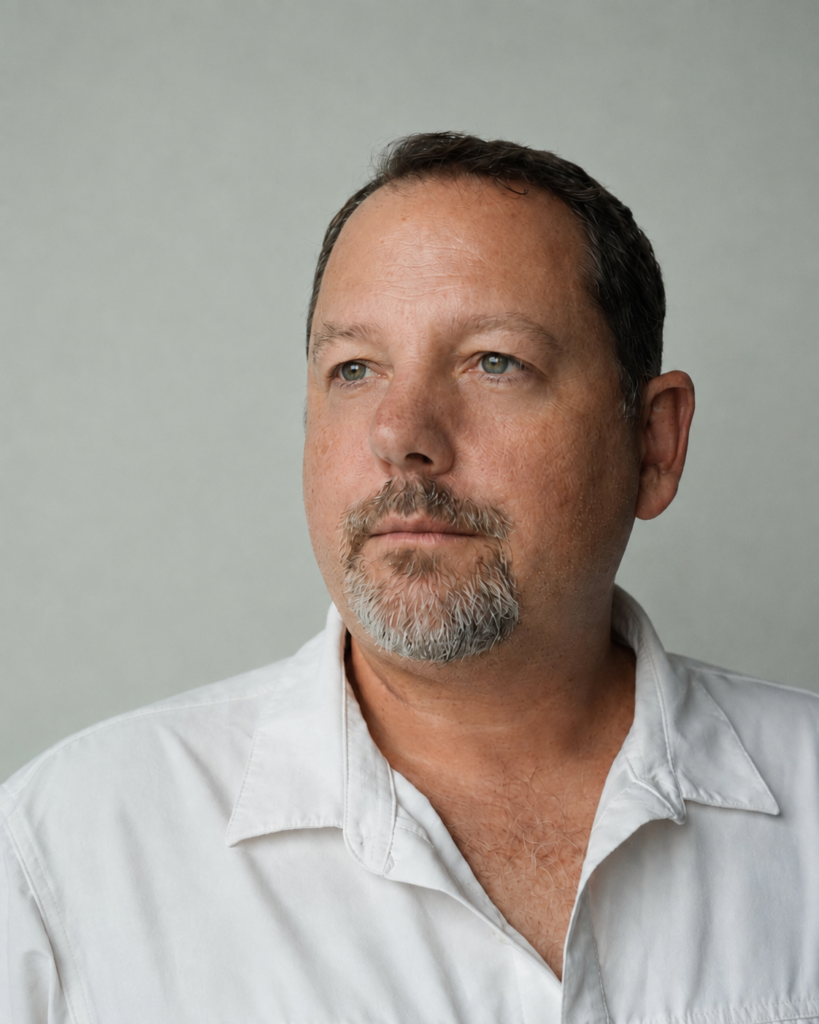
About the author: Greg Shepard is the founder of Dallas Maids, a professional home cleaning company he started in 2004 after a career in technology at IBM and Bank of America. A Baylor University graduate, he writes about entrepreneurship, business, and the observations and lessons he has picked up along the way.
Footnotes
[1] Snyder, Timothy. On Tyranny: Twenty Lessons from the Twentieth Century. Tim Duggan Books, 2017.
[2] Levitsky, Steven and Daniel Ziblatt. How Democracies Die. Crown, 2018.
[3] Ben-Ghiat, Ruth. Strongmen: Mussolini to the Present. W.W. Norton & Company, 2020.
[4] Applebaum, Anne. Twilight of Democracy: The Seductive Lure of Authoritarianism. Doubleday, 2020.
[5] Dalio, Ray. The Changing World Order: Why Nations Succeed and Fail. Avid Reader Press, 2021.
[6] Allison, Graham. Destined for War: Can America and China Escape Thucydides’s Trap? Houghton Mifflin Harcourt, 2017.