
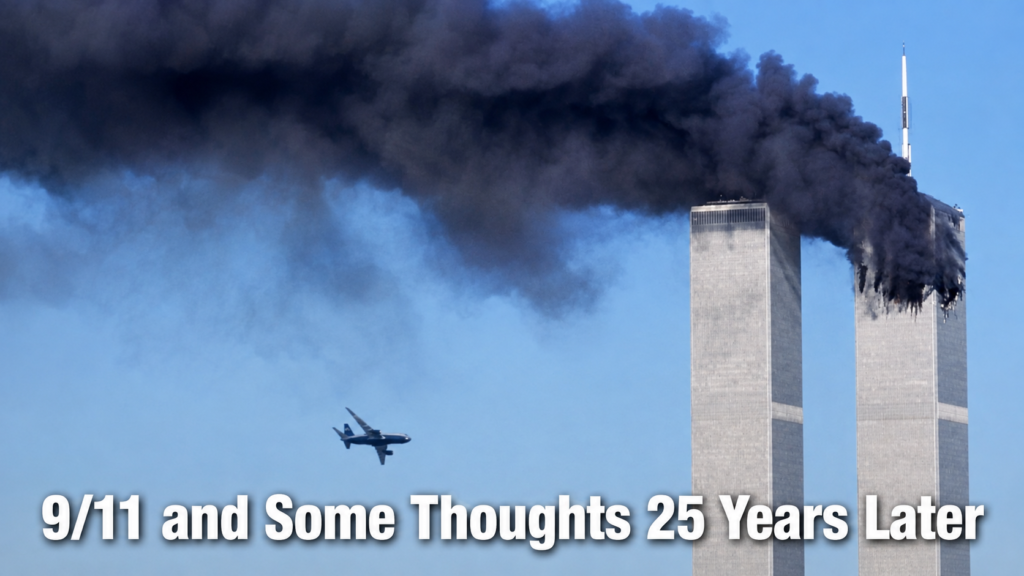
It’s 9/11, and I couldn’t help but drift back to that horrible day 25 years ago, when religious extremists who believed they were carrying out God’s will attacked the World Trade Center, the Pentagon, and Flight 93, killing nearly 3,000 people. September 11th was one of those rare moments when you knew, even as it was happening, that the world had changed. And with the 25th anniversary here, my mind wandered back not only to what I remember from that day, but also to what was happening in my own life around that time. Looking back, some of those seemingly unrelated memories would eventually become seeds that led me to start Dallas Maids.
At the time, I was in my mid-20s, freshly graduated from Baylor and working as a young professional in Bank of America’s IT department. My job was helping manage computer systems that ran software used by the bank’s trust department. And I hated it. Not because it was necessarily a bad job. It just wasn’t a good fit for me.
Years later, Howard Gardner’s book, Intelligence Reframed, helped me understand why. Saying someone is “intelligent” or “not intelligent” is far too simplistic. People can be extraordinarily gifted in one area and, scientifically speaking, dumb as a bag of hammers in another. I am living proof. For instance, math and languages were never my strongest subjects. In Gardner’s framework, that would put me on the weaker side of linguistic intelligence and logical-mathematical intelligence, two abilities that happen to be rather useful when your job involves computer programming and system administration. Oops. And yet another example is that after more than two decades of working with Spanish-speaking employees, I should probably be giving speeches in fluent Spanish by now. Instead, I understand considerably more than I can speak and still occasionally communicate through a sophisticated combination of English, bad Spanish, hand gestures, and hope.
But I had other strengths. I’m a mad genius in spatial intelligence which is the ability to visualize how things fit together, see systems, organize pieces, and mentally rearrange them until something works. That helped me enormously at Baylor University. I learned to visually organize my schedule and allocate study time efficiently, which was an important part of going from struggling academically to eventually graduating with honors. It also helped make me a pretty formidable chess player. During study breaks, I often played at Common Grounds. But most importantly, that same ability turned out to be extraordinarily useful in entrepreneurship. I could see the big picture of a business before it existed. I could mentally visualize how it might grow, design systems and workflows, identify bottlenecks, organize people and routes, and figure out how all the moving pieces should fit together. Apparently my brain didn’t want to administer computer systems. It wanted to build companies.
The origins of Dallas Maids can actually be traced back to an apartment I shared in Dallas while working at Bank of America. My roommate and I hired someone to clean our apartment. The woman who ran the cleaning service was putting herself through SMU and had hired a small team of women to clean homes for her. My roommate was OCD. I, meanwhile, was somewhat less particular. Erm…. much less. Let’s just say our decision to split the cost of a house cleaner probably saved our friendship. As a side note, he’s the one holding the camera in the photo below. OCD had one advantage: the photos were usually framed perfectly.
While watching this little cleaning business operate, I did some quick math in my head. I knew approximately what we were paying, estimated what the cleaners were probably earning, and thought, “Huh. A maid service might actually be a pretty good business.” Thus, that idea eventually made its way onto my big list of possible businesses to start. I’ve written before about the method I used to produce a large number of good business ideas and then let my subconscious chew on them until I found one that I knew would not fail. You can read about that in How Did You Come Up With the Idea?. Though looking back, I think my subconscious had already picked a favorite. And apparently it was very enthusiastic about mops.
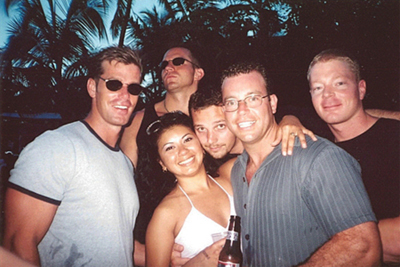
Another small seed that eventually led me toward Dallas Maids came around the same time, on a trip to South Beach for my 27th birthday. One of my friends, Kenny, had started a moving company, now named AB Moving, a few years earlier. During the trip, he somehow managed to lose his wallet. Rather than panic, he simply decided to head home early, bought an expensive one-way ticket back to Texas, and went to deal with getting a new driver’s license.
What struck me wasn’t the lost wallet. It was how little the cost of that last-minute flight seemed to bother him. My frugal brain would have needed a small emergency meeting before buying that ticket. Kenny just did it. And I remember thinking how nice it must be to have enough financial breathing room that an unexpected expense doesn’t ruin your week. That moment stuck with me. It wasn’t that I suddenly thought, “I need to get rich.” It was more that I wanted the freedom and security that could come from building something of my own.
That became one more nudge toward starting a business but, of course, reality was a little less glamorous. When I finally started Dallas Maids, the first several years were mostly about surviving, keeping the doors open, and figuring things out as I went. The financial freedom I imagined on that South Beach trip didn’t arrive quickly. It came much later, after a lot of work, mistakes, and ramen-noodle economics. And for visual evidence from that trip, I’ll include a photo. Kenny is on the far left. My goofy self is the one poking out in the middle.
Soon after 9/11, I remember being at Bank of America one evening after work, printing flyers for a business I was already calling Dallas Maids. The company didn’t exist yet. I didn’t have employees. I didn’t have customers. I didn’t really know what I was doing. But apparently I had flyers, and that counts for something. I was just mentally consumed with the idea of starting a business, although it would still be another couple of years before I finally took the leap and launched Dallas Maids in 2004. In retrospect, that delay may have helped me. Even when I wasn’t consciously thinking about the business, my subconscious continued working on it in the background, turning over ideas, noticing patterns, and gradually developing the instincts I would later use to start, build, and grow Dallas Maids.
But back to 9/11.
I had just woken up and was getting ready for work when it all appeared on the TV. Every channel showed the same horrifying images of the twin towers engulfed in flames. I recall seeing one tower fall, over and over again as was shown on television. It was surreal. It didn’t feel possible. How could anyone deliberately do something so horrific to thousands of innocent people? This now reminds me of a quote from Nobel Prize-winning physicist Steven Weinberg. In an interview a couple of years before 9/11, he said, “With or without religion, you would have good people doing good things and evil people doing evil things. But for good people to do evil things, that takes religion.”
Whatever one thinks of Weinberg’s broader argument, that quote stuck with me because the hijackers really believed they were doing something righteous. Within their worldview, they were not committing evil. They believed they were fulfilling the will of their god. And that may be one of the most frightening things about human beings… people can commit horrific acts while convincing themselves that they are doing good.
I drove to the train station in a daze. I boarded the train like a zombie and rode into downtown Dallas. I don’t know how I was going to work that day. When I arrived at Bank of America, the mood was somber. My boss apparently took one look around and realized that nothing productive was going to happen, so he sent us home. I clearly remember standing at the train station and looking up. The clear blue skies were eerily empty. Not a single cloud. Not a single airplane. For someone accustomed to seeing planes constantly crossing the sky, the absence itself was unsettling. Despite the sky being so blue, everything felt so sad and grey.
When I got home, I remained glued to the television, watching update after update. Both towers had fallen. It still didn’t seem real. I spent some of the day reading that day as my way of temporarily escaping the images playing endlessly on television. Something fundamental had changed.
Unfortunately, fear also created an opportunity for government surveillance powers to expand dramatically. The Patriot Act was signed into law only weeks after the attacks. Years later, Edward Snowden’s disclosures showed just how broadly some surveillance authorities had been interpreted, including the bulk collection of telephone records involving millions of Americans. And now we have artificial intelligence. I sometimes wonder what governments around the world will eventually be capable of doing with technologies that can analyze enormous amounts of information about their citizens almost instantly. That is probably another article. A very cheerful one, obviously.
Airport travel also changed almost overnight. Taking off your shoes became routine after the attempted shoe bombing. Security became more invasive. New scanners appeared. Procedures that would have seemed bizarre before September 11th quickly became normal. Every trip through airport security became a little reminder that the world before 9/11 was gone.
Yet on a more positive note, my life soon changed for the better. I stopped trying to force myself into a career that didn’t align with my natural strengths and moved toward something that did: entrepreneurship. Spatial intelligence helped me see businesses as systems. But another strength became equally important: interpersonal intelligence. I sometimes stumble over the actual words I’m trying to use because linguistic intelligence has never been my strongest suit. But understanding people, their emotions, motivations, strengths, fears, and needs, has always mattered tremendously to me. And that became one of my biggest advantages in building Dallas Maids.
During the early years, when the business was struggling and I was barely surviving on ramen noodles, I was deeply concerned about making sure my employees were okay. They had families, they had bills, and they depended on Dallas Maids for their livelihoods. So even when things were difficult for me personally, I always made sure they were taken care of. That helped me retain good people and good people took care of our customers.
From the start, I boiled my priorities down to this:
1. Our staff
2. Our customers
3. Me
Yes, the owner comes third. My thinking is simple: if I take care of our people, they will take care of our customers. If we take care of our customers, eventually the business will take care of me. That may be the single most important piece of advice I could give another business owner… take care of your people first. They are the ones who will take care of your customers. Do those things well and, eventually, you’ll probably be okay too. There is one small caveat: try not to become too generous. I learned that lesson the expensive way. Twice.
I once paid employees more than the business could actually afford. Eventually I had to explain that unless we reduced compensation, there wouldn’t be a business left to pay anyone at all. Rolling back salaries is approximately as enjoyable as announcing at Christmas dinner that you’ve eaten all the pie. Nobody is happy. Generosity is a virtue. Generosity without math can become an accounting problem. Apparently I eventually needed some of that logical-mathematical intelligence after all.
So on the 25th anniversary of September 11th, these are some of the memories running through my mind: a terrible day, a young man riding a train into downtown Dallas wondering what had just happened to the world, a job that didn’t fit him, a cleaning woman putting herself through college, a notebook filled with business ideas, and some crude Dallas Maids flyers printed years before Dallas Maids actually existed. Eventually, I came to a realization that changed my life: sometimes success isn’t about becoming better at the things you’re bad at. Sometimes it’s about discovering what your brain was built to do and then building your life around it.
One final thought about September 11th troubles me. Violence has a way of producing more radicalism. When one group attacks another, fear and anger can push the victims toward increasingly extreme responses of their own. Looking at the political direction of the United States today, I sometimes wonder how much of what followed 9/11 helped put us on the path we’re now traveling. I’ve written elsewhere about my concerns over democratic backsliding and what that could mean for Dallas Maids. And on this anniversary, an uncomfortable question keeps coming back to me: Twenty-five years later, did the hijackers ultimately succeed in changing America more than we ever imagined?
~ Greg
P.S. Here are the seven forms of intelligences as outlined in Howard Gardner’s book, Intelligence Reframed:
- Linguistic intelligence, skill with words, language, reading, writing, storytelling, and persuasion.
- Logical-mathematical intelligence, reasoning, numbers, patterns, problem-solving, and scientific thinking.
- Spatial intelligence, visualizing objects, layouts, maps, shapes, systems, and how things fit together.
- Bodily-kinesthetic intelligence, using the body skillfully, as athletes, dancers, surgeons, craftspeople, and others.
- Musical intelligence, sensitivity to rhythm, pitch, melody, and musical structure.
- Interpersonal intelligence, understanding other people—their motives, emotions, personalities, and social dynamics.
- Intrapersonal intelligence, understanding yourself—your emotions, strengths, weaknesses, and motivations.
- Naturalistic intelligence, recognizing and classifying patterns in nature, animals, plants, and environments.
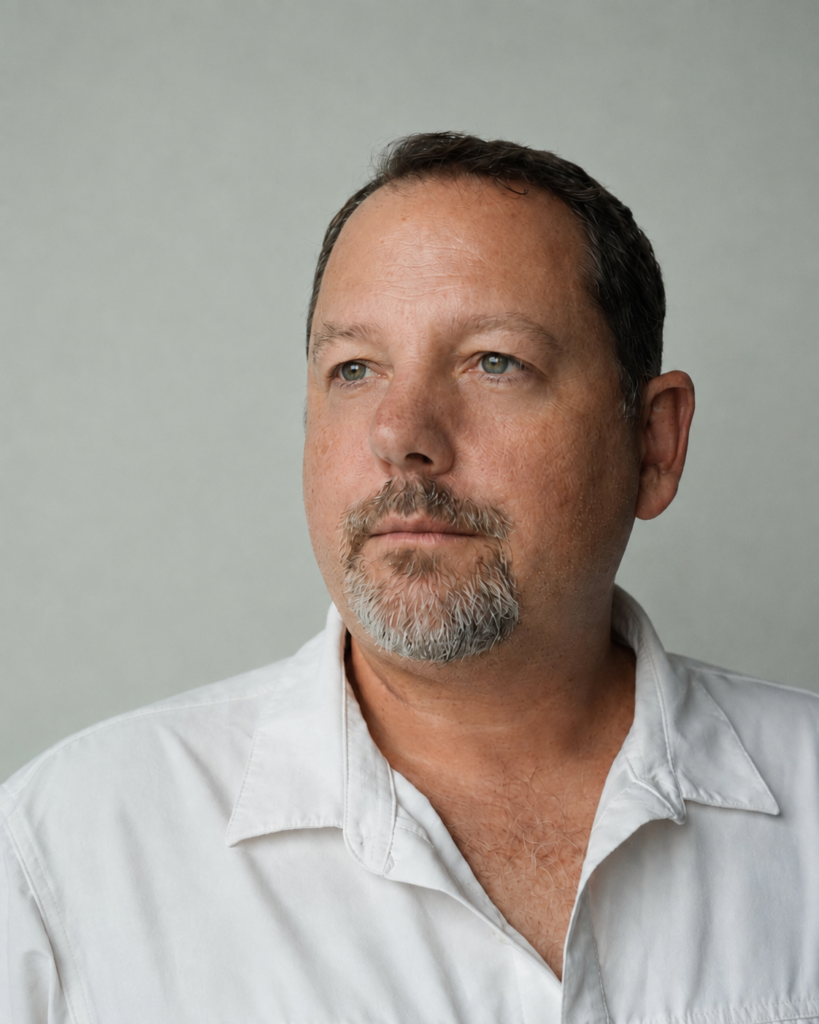
About the author: Greg Shepard is the founder of Dallas Maids, a professional home cleaning company he started in 2004 after a career in technology at IBM and Bank of America. A Baylor University graduate, he writes about entrepreneurship, business, and the observations and lessons he has picked up along the way.