

Meet Bob
Bob is my dad’s cousin. He lives in Brownsville, Texas, in a modest house furnished almost entirely with the same furniture he bought when he moved in back in the early 1980s. The house itself hasn’t changed much either. Walking through the front door is less like visiting Bob and more like entering a time capsule, somewhere around 1979.
Bob also owns a beach house on South Padre Island, and I have great memories of family vacations there going all the way back to the 1980s. That beach house hasn’t changed much either.
Bob shops at Walmart, wears modest clothes, rarely eats out, and generally treats spending money as something to be avoided whenever humanly possible. He calls it the “frugal gene” that runs on that side of the family. The rest of us call him dirt cheap. And that is probably why Bob is filthy rich.
He simply doesn’t spend money.
Years ago, I remember riding in the back seat of a car while my dad drove and Bob sat in the passenger seat. I happened to glance over Bob’s shoulder and caught a glimpse of a piece of paper he was studying. Only for a second. The moment he realized I could see it, he folded it up and shoved it deep into his front pocket. But I had already seen the number at the top. It was the monthly profit from one of the apartment properties he owned.
I was stunned.
Bob was making more in a single month from that one property than I was making in an entire year. And there he was, sitting in front of me, probably wearing a Walmart shirt and wondering if the restaurant we were headed to had a coupon.
The Self-Made Millionaires Do Not Spend
Because Bob didn’t spend much when he was young, he was able to save enough money to invest in his construction business. That mattered more than you might think. Construction is brutally cyclical. One year everybody is building, and a few years later nobody is building anything except maybe resentment. Bob went through stretches that lasted years when he made virtually no money. His frugality gave him staying power. When income disappeared, Bob didn’t have a giant lifestyle to support. No expensive cars, no oversized house payment, and no collection of financial obligations demanding to be fed every month. He could simply wait out the bad years.
That same mindset shows up again and again among successful entrepreneurs and investors. Jeff Bezos famously used a cheap, makeshift desk even after Amazon had become enormously successful. Frugality wasn’t just a personality quirk at Amazon. It was part of the culture that helped the company conserve cash while it was growing.
Warren Buffett is another famous example. In The Snowball, Buffett is portrayed as almost comically frugal. He continued living in the modest Omaha house he bought decades earlier and, for years, showed up to Berkshire Hathaway shareholder meetings wearing the same somewhat unfortunate-looking suits. Buffett understood something most people don’t naturally think about: A dollar spent today isn’t just a dollar. It is also everything that dollar could have become. If you can invest $100 today and eventually turn it into $10,000, then spending $100 on something unnecessary doesn’t feel like spending $100. It feels like spending $10,000.
That way of thinking can make a person look cheap. It can also make a person very wealthy. A lot of self-made millionaires seem to share some version of that mindset.
Should I Spend or Should I Not Spend?
The basic rule is simple: don’t spend more than you have, and be especially careful about going into debt for things that lose value. Cars are a perfect example.
Yes, today you may occasionally see me driving something nice. It wasn’t always that way. Ask some of the Dallas Maids employees who have been with me for years. They remember the old, beat-up Lexus I drove that cost me around $7,000. Before that, I had an even uglier green Lexus with hail damage that I bought for roughly $4,000. Ask Delfina. She remembers it.
When I was younger, some of my friends were buying beautiful new cars. Mine were considerably more… humble. My thinking was simple: Why put a large amount of money into a depreciating asset when I could put that same money into investments and give it decades to grow?
More importantly, being frugal gave me the cash I needed when Dallas Maids was struggling. During those first difficult years, the company was losing buckets of money. I had to keep feeding it cash just to keep it alive. If I had spent all my money trying to look successful, I might never have had enough left over to actually become successful.
How to Retire Comfortably
Now we get to the really powerful part: compound growth. Historically, the U.S. stock market has returned roughly 10% per year over very long periods, before inflation. That doesn’t mean you earn 10% every year. Some years are wonderful, some are terrible, but over long stretches of time, the average has been remarkably strong. And at around a 10% annual return, money roughly doubles every seven years. That is the magic of compound growth, and it can completely change your retirement.
Let’s look at an example. The average age of our Dallas Maids staff is around 35, give or take a few years. So imagine you are 35 years old and decide to start investing for retirement. Let’s say you invest $6,500 per year into a Roth IRA for ten years. I can already hear someone saying, “$6,500? Greg, have you seen the price of groceries?” Fair point. But let’s look at it another way.
Many of our cleaning professionals receive around $25 per workday in tips. If you saved just those tips, $25 a day × 5 days a week × 52 weeks a year equals $6,500 per year. Suddenly the number doesn’t seem quite as impossible. And now the math starts getting interesting.
Using the calculator at thecalculatorsite.com/finance/calculators/compoundinterestcalculator.php we find you will have $117,059.33 after 10 years:
Yearly Breakdown – Compound interest for10 Years

$117,059.33 after 10 years of socking away $6500 in your Roth IRA. Not bad. But it gets much better.
Using the same calculator above, let us see what happens when you stop adding $6500 annually and just let compound interest do its thing for 22 more years until the retirement age of 67:
Yearly Breakdown – Compound interest for 22 Years until retirement age of 67

$1,046,875.03
Nice!
I know some of you are helping pay for your children’s higher education, and that makes me incredibly proud of you. You’re not only giving them an education; you’re giving them a better financial starting point in life. My hope is that you pass these lessons along to your kids as well. Once they finish school and begin their careers, they may have the opportunity to earn more, which can make saving and investing for retirement much easier. But their biggest advantage isn’t necessarily how much they can invest. It’s how early they can start.
Time is one of the most powerful ingredients in building wealth because so much of the growth from compounding happens in the later years. The earlier your children begin investing, the more time their money has to do the heavy lifting for them. For example, suppose your child follows the exact same investing plan but starts at age 25 instead of age 35. That gives the money an extra 10 years to compound, e.g. 42 years instead of 32:
Yearly Breakdown – Compound interest for 32 Years until retirement age of 67

That brings us to $2,833,934.14—nearly three times as much.
That is the power of compound growth. It is also why starting early matters so much. The money you invest in your 20s and 30s has decades to work for you, and those later years of growth can make an enormous difference. Now let’s look at some more modest numbers for a Roth IRA.
Most people may not be able to invest $6,500 a year right away, and that’s fine. Suppose you can save $270 a month. That works out to $3,240 a year. If you invested $3,240 once a year and continued doing so until retirement, you would end up with approximately:
$718,137.69
But if you invested the same amount gradually, $270 every month instead of waiting to make one annual deposit, you would end up with approximately:
$751,984.01
That is an extra $33,846.32 simply because more of your money had more time in the market. Not bad for changing when you invest rather than how much you invest.
Now suppose you invested for only 10 years and then stopped contributing altogether. Even if you never added another dollar, the money already invested would continue compounding and could grow to approximately:
$494,627.05
That is the lesson I want you to remember: the earlier you can get money invested, the more time compound growth has to work its magic. And if you can manage roughly $250 from each paycheck for 10 years, enough to reach about $6,500 per year, you could potentially build that into more than $1 million over the following decades.
The goal is not to become wealthy overnight. The goal is to give your money enough time to become wealthy for you.
How to Make It Last in Retirement
So let’s say you actually reach that magical $1 million mark. The obvious next question is: How long will it last?
Using a retirement calculator such as the one from Mutual of Omaha, we can run a simple example. Suppose you retire with $1 million and withdraw $65,000 during your first year. Then, each year, you increase that withdrawal by 3% to help keep up with inflation.
Under those assumptions, the money could last approximately 31 years. So, if you retired at 67, that would take you to around age 98. And if I make it to 98, I suspect my biggest financial concern will no longer be whether I bought the right mutual fund.

What if you live past 98? Lowering the starting amount to $60,000.00 should last you just past the golden age of 105.
But what if you are fortunate enough to live past 98?
Lower the starting withdrawal to $60,000 a year, and under the same assumptions, your money could last beyond age 105. At that point, congratulations. You have officially made retirement planning somebody else’s problem.
How to Pick Stocks
Now let’s rewind a little and talk about how to choose investments in the first place. You will need a brokerage platform where you can open a Roth IRA and buy stocks. I use E*TRADE for my Roth IRA because it is easy to use and offers commission-free stock trades. If you want to look into it, you can start here: https://refer.etrade.net/0wwccm. Once the account is set up, the bigger question becomes: What should you actually buy?
1) Buy What You Know
Before I started investing in stocks, I did what I usually do when I do not know something: I read.
A lot.
One of the best pieces of investing advice I came across was in You Have More Than You Think by David and Tom Gardner of The Motley Fool. Their advice was wonderfully simple: Buy what you know.
Look around your house and pay attention to the companies whose products you actually use. Open your bathroom cabinet and you may find Johnson & Johnson products. Look at the phone in your hand. Is it an iPhone? Apple is a publicly traded company. Android phones depend heavily on Google’s ecosystem, and Alphabet is publicly traded as well.
Where do you shop for clothes? Maybe Ross. What stores are consistently busy? Which products do you and your friends keep buying year after year?
The point is not that every familiar company is automatically a good investment. It is that familiarity gives you a starting point. You already understand the product, you see how customers respond to it, and you may have a better feel for the business than you would with some obscure company you discovered because a guy on the internet promised it was “about to explode.”
That is a much better place to begin.
For example, Ross Stores has been a successful business for many years. Apple and Alphabet have built products that hundreds of millions of people use every day. Johnson & Johnson has products sitting in homes all over the world.
Start by noticing the businesses already woven into your everyday life. Then do your homework. For example, let’s take a look at Ross (ROST):

All the products and services you use every day tend to come from large, well-establish companies that will most likely still be around in 40 or 60 years while growing at a steady rate.
2) Copy the Big Boys
Warren Buffett. Ray Dalio. George Soros. These are some of the big-name investors whose portfolios I occasionally peek at.
Why? Because they have teams of analysts, enormous amounts of money at stake, and a strong incentive to get their investment decisions right. Their livelihood depends on it. So instead of pretending I know more than people who spend their entire lives studying markets, I like to see what the big boys are doing.
That does not mean blindly copying every stock they buy. It means paying attention to the bigger trends they are betting on, then doing your own research. For instance, back around 2010, I noticed that a number of major investors were putting money into clean energy. After looking into it myself, I agreed with the basic idea. Fossil fuels are finite, and over time the world was going to need cleaner alternatives. But instead of buying clean-energy companies directly, I asked myself a slightly different question: What industries would benefit if the world gradually moved away from oil?
My answer was electric vehicles.
That line of thinking eventually led me to buy Tesla stock in 2011 at a split-adjusted price of roughly $1.60 per share. Years later, the stock had risen dramatically. That was one of the best investments I ever made, but the more important lesson is not “buy Tesla.” The lesson is to pay attention to where major investors see long-term change happening, then think one step beyond the obvious.
3) Diversify
Whatever stocks you choose, do not put all your money into one company or one industry. You have heard the old saying, “Don’t put all your eggs in one basket.” Investing is no different. Diversification simply means spreading your money across different companies and industries so that one bad event does not wipe out everything you have built. If you own five companies and all five are in the same industry, you may feel diversified because you own five stocks. But if that entire industry gets hammered, all five may fall together.
A better approach is to spread your investments around. Maybe some technology, healthcare, consumer goods, financial companies, industrials, and other sectors. The goal is not to eliminate risk. That is impossible. The goal is to make sure one bad bet does not take the whole basket of eggs with it.
Bitcoin
I recently read Ray Dalio’s Principles for Dealing with the Changing World Order: Why Nations Succeed and Fail. His basic argument is that countries rise and fall in long economic cycles, and he believes the United States is entering a difficult part of that cycle, one marked by heavy debt, political division, weakening currency, and economic instability. Whether or not you agree with his darker predictions, his broader point about diversification is worth considering. Dalio has argued that investors should not rely entirely on stocks and cash, but should also consider assets such as gold, real estate, and Bitcoin. That is where Bitcoin gets interesting to me.
Cathie Wood, founder and CEO of ARK Invest, has described Bitcoin as a global, private, rules-based monetary system. In simple terms, Bitcoin is not controlled by one country, one central bank, or one government. Its supply is capped at 21 million coins, which means no government can simply decide to create more of it. That scarcity is one reason I find it compelling. Governments can print more currency. They cannot print more Bitcoin.
Does that mean Bitcoin will one day replace the U.S. dollar as the world’s reserve currency? Maybe. Maybe not. Nobody knows with certainty, and anyone who tells you otherwise is selling something. But I do think Bitcoin represents something unusual: a genuinely new asset class with global reach, limited supply, and no central authority controlling it. Opportunities like that do not come around very often.
For me, Bitcoin also adds another form of diversification.
Buy Some Bitcoin—But Learn About It First
Years ago, I believed Tesla had a strong chance of disrupting the automobile industry. I researched the company, understood the basic thesis, and eventually bought Tesla stock. Fortunately, that investment worked out very well. I feel a similar sense of long-term potential with Bitcoin.
But remember the first rule I mentioned earlier: Buy what you know. So before buying Bitcoin simply because Greg from Dallas Maids told you to, learn how it works. Understand why the supply is limited. Learn what gives it value, why people distrust it, what could go wrong, and why others believe it may become increasingly important. Then make your own decision.
I’ll end this section with a question: Could Bitcoin someday replace, or at least compete with, the dollar as a major global reserve asset?
I don’t know. But I think the possibility is greater than many people realize.
Ray Dalio has written extensively about the risks that heavy debt and money creation can pose to reserve currencies. Other prominent investors have also questioned how long the United States can continue accumulating debt without consequences.
Rather than pretending I know exactly how this ends, I’ll let Dalio explain his argument himself in the video below.
May This Help Secure Your Future
I hope you found something useful in all of this. More than anything, I hope it encourages you to start saving and investing for yourself and to pass some of these lessons along to your kids.
Your children have an advantage that money cannot buy later: time. If they learn to invest while they are young, compound growth has decades to work in their favor. Even relatively small amounts invested early can become surprisingly large amounts later in life. And whether it is stocks, real estate, Bitcoin, or some investment that hasn’t even been invented yet, I hope you teach them to learn first, think long term, and give their money a chance to grow.
As for Bitcoin, I obviously believe it has tremendous potential. Whether it ultimately transforms the financial system as much as I suspect it will remains to be seen. But I think it is worth understanding and, for those comfortable with the risk, considering as part of a diversified portfolio. Maybe it will even help make you filthy rich one day.
Just like Bob.
Although if that happens, please buy yourself some new furniture. Bob has taken this frugal thing far enough.
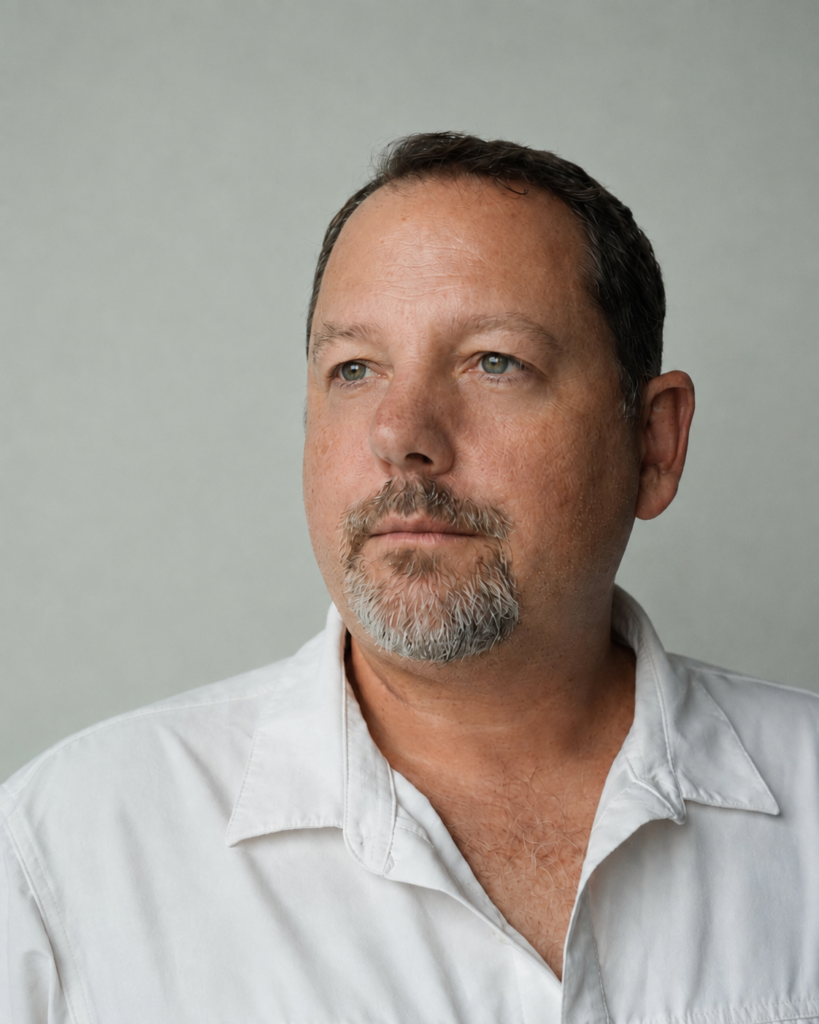
About the author: Greg Shepard is the founder of Dallas Maids, a professional home cleaning company he started in 2004 after a career in technology at IBM and Bank of America. A Baylor University graduate, he writes about entrepreneurship, business, and the observations and lessons he has picked up along the way.