
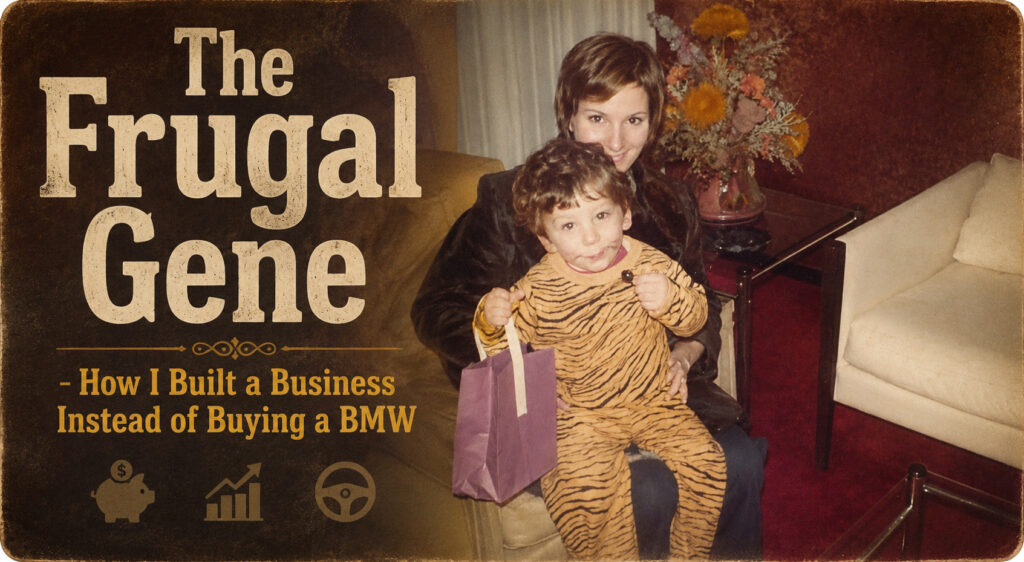
During my university years, my friends knew me as the cheap one.
Actually, “cheap” isn’t quite fair. My dad’s cousin Bob preferred the term frugal. He claimed our family carried a hereditary condition known as the “frugal gene”, and judging by the evidence, he may have been right. Bob was infected. And I was a severe case.
While my friends drove BMWs and Lexuses, I drove a reasonably priced, used Mustang. When they showed up wearing Gucci, Versace, and other brands I couldn’t pronounce, I wore more practical clothing. Though I did own a counterfeit Giorgio Armani shirt that I was quite proud of. It made me feel like I had one foot in the cool crowd and the other firmly planted in the clearance rack.
I had developed a deep appreciation for the value of money at an early age. If my car broke down, I didn’t take it to a mechanic. I bought a Haynes repair manual and fixed it myself. Those manuals were written so clearly that a reasonably motivated twelve-year-old could probably rebuild an engine. And when grocery shopping, I compared prices down to the ounce. Thanks to a marketing class back at Baylor, I learned that many generic products were nearly identical to their name-brand counterparts. The only major difference was the packaging and the advertising budget. So, why pay extra for a fancy label like Kellogg’s Raisin Bran when the generic version contained the exact same cereal?
I paid off my credit cards.
I invested in my retirement accounts.
I bought books instead of designer clothes.
I saved.
And I saved some more.
One day, I accidentally paid my credit card bill twice and ended up with a positive balance. When I joked about it, my roommate’s sister responded:
“That must be niiice.”
I felt a twinge of emarrassement by what I had said because the implication was clear. Not everyone viewed money the same way I did. My roommate certainly didn’t. I found that out one afternoon while coming home from work. I walked in the door and opened what looked like my monthly credit card statement. My eyes nearly popped out of my head. Balance Due: $19k!
Nineteen thousand dollars? I was convinced the bank had made a catastrophic error. My heart rate doubled. I started mentally calculating how many kidneys I could sell. Then I noticed the name on the statement…
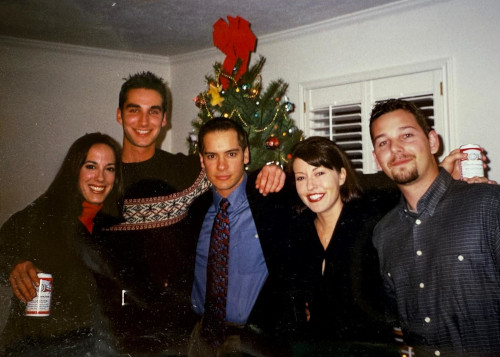
It wasn’t mine. It was my roommate’s. We had the same credit card from the same bank, and I had accidentally opened his mail. My panic disappeared immediately. His embarrassment probably took a bit longer. Then again, he did drive a nice BMW. Apparently, someone was enjoying all that credit.
The point is I wasn’t saving money because I enjoyed deprivation. I was saving because I wanted options. And eventually, those options became important.
When the opportunity came to start Dallas Maids, the money was there. At least some of it. What I dramatically underestimated was how expensive it is to start and grow a business. The money I had carefully saved began disappearing faster than free pizza at a college dorm. Soon my bank account was running dangerously low. But fortunately, I had investments. Unfortunately, one of those investments was Amazon stock. So I sold it. And to this day, I occasionally calculate what that Amazon stock would be worth had I held onto it. Anyway, I try not to do the math too often because I enjoy sleeping at night.
If only I had sold my Coca-Cola stock instead…
Still, Dallas Maids ultimately turned out to be a better investment than Amazon for me personally, so I can’t complain too much. The lesson is simple: If I hadn’t been frugal in my younger years, I wouldn’t have had the money to start Dallas Maids. And if I hadn’t had the money, I might not be where I am today.
For those aspiriong entreprenuers out there, here is a formula for estimating the cost of starting a business I once read in some business book:
Actual Cost = (Total Estimated Cost × 2) + 25%
In other words, take everything you think you’ll need. Double it. Then add another 25% for all the mistakes you’re about to make. And based on my experience, that formula is incredibly accurate. Most businesses don’t fail because people lack passion. Many fail because they run out of money. Fortunately, my frugal gene helped me avoid that fate.
And even after Dallas Maids became successful, I remained frugal. Heck, most of my house cleaners drove nicer cars than I did. I lived in a modest condo. Then a middle-class home (I still do!). In fact, it took eleven years after starting Dallas Maids before I finally bought my first truly nice car. A Tesla Model S.
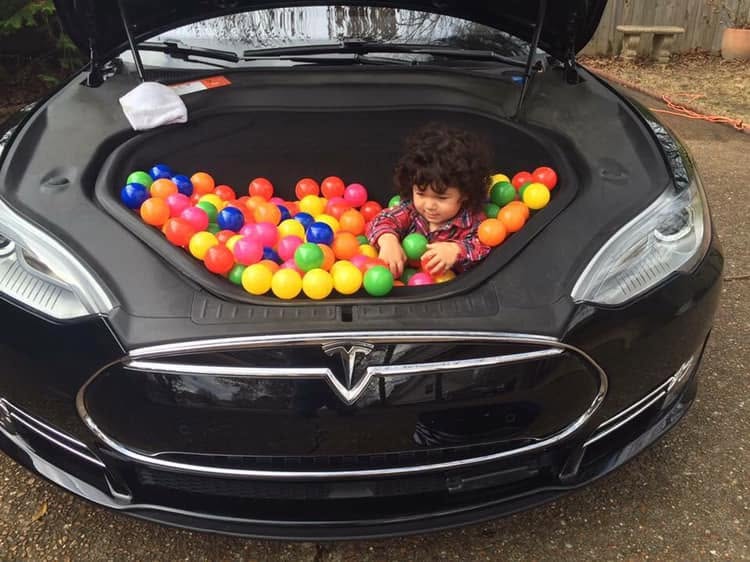
I had originally been shopping for a used BMW because, naturally, I always bought used cars. Why absorb the immediate depreciation when someone else could do it for you? But after nearly buying a used BMW that turned out to be a lemon (the sales person knew this, too), a friend named Veronica gave me some advice while I was contemplating buying a nice car finally. She said, “Just buy the car. You’ve worked hard. Reward yourself.” So, after much internal debate (and more spreadsheet calculations than I’d care to admit) I finally did.
And wow. I loved that car. The technology. The design. The performance. The fact that I didn’t have to worry about whether the previous owner had treated it like a demolition derby participant. Sure, I still felt slightly guilty spending that much money, but for once, I allowed myself to enjoy the reward. So if my daughters are reading this someday, here’s the lesson I’d like to leave you with:
Money is a merciless master, but a superb servant
Learn to control it before it controls you. Work hard. Save early. Invest consistently. Delay some of today’s pleasures so you can enjoy far greater opportunities tomorrow.

In fact, I’ve invested every dollar my daughters received as toddlers because I wanted them to see the power of investing. Today, those small investments have grown into something far more meaningful. That’s the magic of compound interest…. and perhaps having a father who occasionally picks the right stock.
So let me end by dispelling a common myth among the masses. Many people think rich people spend lots of money when in reality, many rich people became rich because they didn’t. For instand, take cousin Bob (Right). He still shops for shoes at Walmart. He’s lived in the same, modest house for nearly a quarter of a century. He dresses like a man who misplaced his fortune years ago. Yet he owns apartment complexes, a beach house, and can probably buy a small Caribbean island if he felt like it.
The frugal gene never left him. And frankly, I hope the frugal gene is passed on to my daughters.

About the author: Greg Shepard is the founder of Dallas Maids, a professional home cleaning company he started in 2004 after a career in technology at IBM and Bank of America. A Baylor University graduate, he writes about entrepreneurship, business, and the observations and lessons he has picked up along the way.